Reviewing Trust Me I'm a Nurse Sublimation Design
As an embroidery designer who has spent years digitizing and testing files for small business owners, I approach every new machine embroidery design with a critical eye. It is not enough for a graphic to look good on a screen; it must survive the needle, the thread tension, and the wash cycle. Recently, I evaluated Trust Me I m a Nurse-design Sublimation to determine its viability for real-world craft projects. While this product is marketed primarily as a sublimation and cutting file set, understanding its visual structure is essential for anyone in the Crafts and Graphics space looking to adapt it for stitched applications or hybrid techniques.
First Impressions and Visual Personality
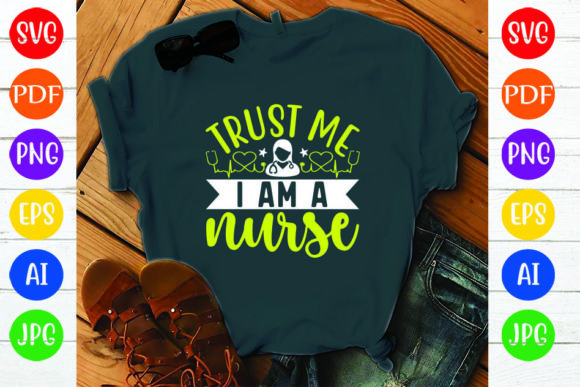
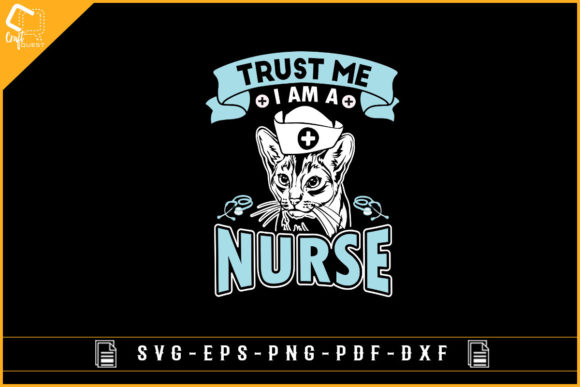
The immediate mood of this design is confident and playful. The phrase "Trust Me, I Am a Nurse" carries a specific cultural weight—it implies competence mixed with a touch of humor that resonates deeply with healthcare workers. Visually, the layout is clean. For an embroidery project, clarity is king. Complex, cluttered designs often turn into muddy blobs of thread once stitched out. This design’s strength lies in its legibility. The typography appears bold enough to hold up well, suggesting that if adapted correctly, it would maintain its impact even when translated from a digital embroidery file concept to physical thread.
When I imagine this on a finished product, I do not see it as a subtle, background element. It is a statement piece. It belongs on items where the wearer wants to be seen and acknowledged. This makes it ideal for custom apparel like scrub caps, tote bags, or cozy sweatshirts worn during off-hours. The design does not rely on intricate shading or gradient effects, which are notoriously difficult to replicate in standard home embroidery without advanced techniques like photo stitch. Instead, it relies on shape and contrast, making it a safer bet for hobbyists and professional Etsy sellers alike.
Real-World Application Scenarios
To truly test the potential of Trust Me I m a Nurse-design Sublimation, I mentally placed it in several common production scenarios. Consider a custom embroidered tote bag for a nursing graduation gift. The flat surface of a canvas tote provides an excellent foundation. Here, the design could be applied via sublimation for a full-color print, or if digitized separately, filled with a dense satin or fill stitch. The result would be a durable, high-value handmade product that feels personal and professional.
Another strong candidate is sweatshirt embroidery. A crewneck sweatshirt offers a thick, stable fabric that handles stitch density well. Placing this design on the left chest creates a boutique feel, while a larger back placement makes a bold statement. For small shop products, this versatility is crucial. You can offer multiple price points: a smaller, simpler version for hats and a larger, more detailed version for jackets. However, since the provided files are SVG, EPS, DXF, PNG, and PDF, remember that these are vector and raster graphics meant for printing or cutting. They are not native embroidery formats like PES or DST. You will need to digitize them or use auto-digitizing software carefully to convert these design assets into stitch-ready files.
Navigating Fabric and Technique Challenges
While the design is visually strong, practical execution requires caution. If you plan to stitch this onto textured fabrics, such as terry cloth towels or fuzzy fleece, the details may get lost. In these cases, using an applique design technique might be smarter. You could cut the letters from felt or vinyl and stitch them down, using the embroidery machine only for the border. This reduces stitch density and prevents the fabric from puckering.
Dark fabrics present another challenge. If you are stitching directly onto navy or black scrubs, you must ensure high contrast in your thread colors. White or bright neon threads will pop, but muted tones will vanish. Always test your design on scrap fabric first. Check how the stabilizer interacts with the material. For stretchy fabrics like jersey knits used in t-shirts, a cut-away stabilizer is non-negotiable to prevent distortion after washing. Without proper stabilization, even the best-designed text can warp, ruining the professional look of your finished product.
Commercial Viability and Brand Consistency
For commercial embroidery professionals, consistency is key. This design fits well within the niche of medical appreciation gifts. It aligns with holidays like Nurses Week or Christmas, making it a reliable seller for seasonal holiday embroidery collections. However, because this is a popular phrase, differentiation is important. Your value add comes from the quality of your stitching, the choice of premium blanks, and the presentation. A well-executed embroidered patch featuring this design can be sold as a standalone accessory, allowing customers to iron or sew it onto their own gear, expanding your market reach beyond just finished garments.
Buyer engagement often hinges on trust. When a customer sees a crisp, clean design with no loose threads or uneven edges, they perceive higher value. This design’s simplicity works in your favor here. There are fewer opportunities for error compared to highly complex floral or portrait designs. This reliability helps build brand consistency for your craft business. Customers know that if they order this item, they will receive a polished, professional result.
Practical Designer Notes
Before launching this design in your store, keep these technical considerations in mind:
- Digitization Quality: Since the source files are for printing and cutting, ensure your digitized version uses appropriate stitch types. Use satin stitches for smaller text elements to keep them sharp, and fill stitches for larger areas if you choose to solidify the letters.
- Hoop Size Constraints: Verify the dimensions of the design against your available hoop sizes. A design that is too large for a 4x4 hoop may require repositioning or splitting, which complicates the process.
- Licensing Verification: Always confirm the license terms. While the description mentions readiness for print and cut, ensure you have the rights to sell items made with the digitized version of this graphic. Commercial use rights vary between designers.
- Mockup Testing: Since mockups are not included, create your own. Test the design in black and white to check for contrast issues. Visualize it on both light and dark backgrounds to ensure versatility.
- Thread Choice: Polyester thread is generally recommended for items that will be washed frequently, such as scrubs and towels, due to its colorfastness and durability compared to rayon.
In conclusion, Trust Me I m a Nurse-design Sublimation offers a solid foundation for creative entrepreneurs. Its clear, bold aesthetic translates well to various mediums, provided you respect the technical limitations of embroidery. By paying attention to fabric choice, stabilization, and digitization quality, you can transform this graphic into a high-demand personalized gift or a staple item in your small shop product lineup. It is a reminder that in our industry, the best designs are not just those that look good, but those that work hard for the maker and the wearer alike.